Buy 953.eu ?
We are moving the project
953.eu .
Are you interested in purchasing the domain
953.eu ?
domain@kv-gmbh.de · 0541-91531010
Buy 953.eu ?
What is a hydroxyl group in alcohols?
A hydroxyl group in alcohols is a functional group consisting of an oxygen atom bonded to a hydrogen atom, which is then bonded to a carbon atom in the alcohol molecule. This group is responsible for the characteristic properties of alcohols, such as their ability to form hydrogen bonds and their ability to participate in various chemical reactions. The presence of the hydroxyl group also gives alcohols their distinctive physical and chemical properties, such as their solubility in water and their ability to undergo oxidation reactions. **
Why are hemiacetal hydroxyl groups more reactive?
Hemiacetal hydroxyl groups are more reactive than regular hydroxyl groups because they are attached to a carbon atom that is also bonded to an oxygen atom. This makes the carbon atom partially positive, increasing the electrophilicity of the hydroxyl group. As a result, hemiacetal hydroxyl groups are more prone to nucleophilic attack, making them more reactive in various chemical reactions such as acetal formation or hydrolysis. **

Similar search terms for Hydroxyl
Top-Angebote
Products related to Hydroxyl:
-
Klutz: LEGO GadgetsThis activity kit will have you building 11 machines including a gravity powered car and a wacky boxing robot. The fun doesn't stop once you've completed all of the projects in the book - open-ended prompts will inspire you to continue experimenting...24,99 $*Shipping: 0,00 $Secure redirect to the provider
-
TOPRAN 720 953 Air filterFilter type: Filter Insert; Shape: Cylindrical; Frame Material: Foam; Height: 122; Outer Diameter [mm]: 168; Inner Diameter [mm]: 118; Emissions Standard: CEE 19-5, US 87, CEE 95; for RPO number up to: 07972, 07300; for RPO number from: 07973; TecDoc Engine Number: 28349,99 £*Shipping: 8,45 £Secure redirect to the provider
-
VEGAZ FK-953 Catalytic converterFitting Position: Front; Length [mm]: 540; Emissions Standard: Euro 1/Euro 2; Supplementary Article / Supplementary Info: with attachment/mounting material; Registration Type: ECE approved; Certificate: ECE-R103; Construction Year from: 01/1996, 03/1998, 01/1998, 05/1997, 11/1997, 10/1998; Construction Year to: 03/1998, 08/2000, 10/2002; Engine Code: JJA, HCS, JJB; Catalytic Converter Type: for vehicles with catalytic converter; Vehicle Equipment: for vehicles without OBD, for vehicles with air conditioning, for vehicles with OBD; Vehicle Equipment Line/Trim Level: Courier, EEC7 Emissions; TecDoc Engine Number: 12083, 17169238,99 £*Shipping: 1,99 £Secure redirect to the provider
-
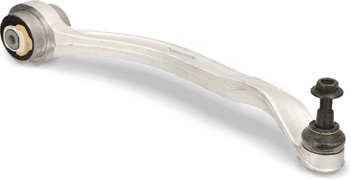
OPTIMAL G5-953 Suspension armFitting Position: Lower, Front, Front Axle, Left; Control/Trailing Arm Type: Control Arm; Length [mm]: 398; Required quantity: 1; Material: Aluminium; Mounting Type: Rubber-Metal Mount; Replace in pairs only: ; Supplementary Article / Supplementary Info Info 2: with ball joint, with rubber mount; Mounting points diameter [mm]: 14,2; Paired product: G5-954; External Thread [mm]: M16 x 1,50 RHT M; Registration Type: TÜV®/GS approved; Bolt Head Diameter [mm]: 19213,99 £*Shipping: 1,99 £Secure redirect to the provider



-
What is the question about the hydroxyl groups?
The question about hydroxyl groups could be related to their chemical properties, such as their ability to form hydrogen bonds and affect the solubility of organic compounds. It could also be about their role in biological molecules, suchjson as carbohydrates and alcohols, and how they contribute to the function of these molecules. Additionally, the question could be about the methods for identifying hydroxyl groups in a compound, such as through chemical tests or spectroscopic techniques. **
-
Why is the hydroxyl group on the anomeric carbon atom more reactive than the other hydroxyl group of the glucose molecule?
The hydroxyl group on the anomeric carbon atom of glucose is more reactive because it is part of the hemiacetal functional group, which is less stable than the hemiketal functional group found on the other hydroxyl group. The anomeric carbon is also more susceptible to nucleophilic attack due to its position in the ring structure, making it more reactive. Additionally, the anomeric hydroxyl group can easily undergo mutarotation, converting between the alpha and beta forms, further increasing its reactivity. **
-
Why are alkyl groups hydrophobic and hydroxyl groups hydrophilic?
Alkyl groups are hydrophobic because they consist of nonpolar carbon and hydrogen atoms, which do not interact well with water molecules. This causes them to repel water and prefer to interact with other nonpolar molecules. On the other hand, hydroxyl groups are hydrophilic because they contain a polar covalent bond between oxygen and hydrogen, creating a partial negative charge on the oxygen and a partial positive charge on the hydrogen. This polarity allows hydroxyl groups to form hydrogen bonds with water molecules, making them soluble in water and thus hydrophilic. **
-
How can one recognize hydroxyl groups and carboxyl groups?
Hydroxyl groups can be recognized by the presence of an -OH functional group, which consists of an oxygen atom bonded to a hydrogen atom. Carboxyl groups can be recognized by the presence of a -COOH functional group, which consists of a carbonyl group (C=O) bonded to a hydroxyl group (-OH). Both hydroxyl and carboxyl groups are polar and can participate in hydrogen bonding, which gives them distinctive chemical properties. Additionally, hydroxyl groups are commonly found in alcohols and carbohydrates, while carboxyl groups are commonly found in organic acids and amino acids. **

Why do acids donate protons, but hydroxyl groups do not?
Acids donate protons because they have a tendency to lose a hydrogen ion (H+) in solution, making them capable of donating protons to other substances. This is due to the presence of a polar covalent bond between the hydrogen and the electronegative atom in the acid molecule. On the other hand, hydroxyl groups do not donate protons because the oxygen atom in the hydroxyl group is more electronegative than the hydrogen atom, resulting in a stronger bond between them. As a result, hydroxyl groups are more likely to accept protons rather than donate them. **
What is the difference between a hydroxyl group and hydroxide ions?
A hydroxyl group is a functional group consisting of an oxygen atom covalently bonded to a hydrogen atom, typically attached to a carbon atom in an organic compound. On the other hand, hydroxide ions are negatively charged ions consisting of an oxygen atom covalently bonded to a hydrogen atom, but with an additional electron, giving it a net charge of -1. Hydroxyl groups are found in organic molecules, while hydroxide ions are typically found in aqueous solutions as a result of the dissociation of water molecules. **
Top-Angebote
Products related to Hydroxyl:
-
Rare Purchases Piece Repair Tool Kit With Torx Screwdrivers For Digital Devices And Gadgets magnetismIntroducing our Multifunctional Precision Screwdriver Set, the essential tool kit for anyone who works with digital devices. Whether you're repairing a phone, tablet, PC, or any other gadget, this versatile tool set provides all the necessary...49,97 $*Shipping: 0,00 $Secure redirect to the provider
-
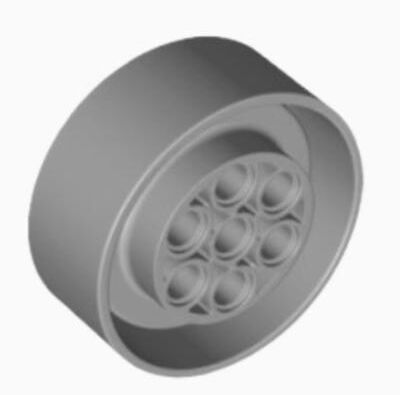
Lush Living Finds Perforated Brick Assembly Toy Accessories With Technology Mechanical Wheels Perforated Brick Assembly Toy Accessories With Technology Mechanical WheelsEnhance Creativity with Technology Mechanical Wheels Unlock the power of innovation with our technology mechanical wheels, designed specifically for perforated brick assembly toy accessories. Whether you are a hobbyist or a seasoned builder, these...43,97 $*Shipping: 0,00 $Secure redirect to the provider
-
Klutz: LEGO GadgetsThis activity kit will have you building 11 machines including a gravity powered car and a wacky boxing robot. The fun doesn't stop once you've completed all of the projects in the book - open-ended prompts will inspire you to continue experimenting...24,99 $*Shipping: 0,00 $Secure redirect to the provider
-
TOPRAN 720 953 Air filterFilter type: Filter Insert; Shape: Cylindrical; Frame Material: Foam; Height: 122; Outer Diameter [mm]: 168; Inner Diameter [mm]: 118; Emissions Standard: CEE 19-5, US 87, CEE 95; for RPO number up to: 07972, 07300; for RPO number from: 07973; TecDoc Engine Number: 28349,99 £*Shipping: 8,45 £Secure redirect to the provider
-
What is a hydroxyl group in alcohols?
A hydroxyl group in alcohols is a functional group consisting of an oxygen atom bonded to a hydrogen atom, which is then bonded to a carbon atom in the alcohol molecule. This group is responsible for the characteristic properties of alcohols, such as their ability to form hydrogen bonds and their ability to participate in various chemical reactions. The presence of the hydroxyl group also gives alcohols their distinctive physical and chemical properties, such as their solubility in water and their ability to undergo oxidation reactions. **
-
Why are hemiacetal hydroxyl groups more reactive?
Hemiacetal hydroxyl groups are more reactive than regular hydroxyl groups because they are attached to a carbon atom that is also bonded to an oxygen atom. This makes the carbon atom partially positive, increasing the electrophilicity of the hydroxyl group. As a result, hemiacetal hydroxyl groups are more prone to nucleophilic attack, making them more reactive in various chemical reactions such as acetal formation or hydrolysis. **
-
What is the question about the hydroxyl groups?
The question about hydroxyl groups could be related to their chemical properties, such as their ability to form hydrogen bonds and affect the solubility of organic compounds. It could also be about their role in biological molecules, suchjson as carbohydrates and alcohols, and how they contribute to the function of these molecules. Additionally, the question could be about the methods for identifying hydroxyl groups in a compound, such as through chemical tests or spectroscopic techniques. **
-
Why is the hydroxyl group on the anomeric carbon atom more reactive than the other hydroxyl group of the glucose molecule?
The hydroxyl group on the anomeric carbon atom of glucose is more reactive because it is part of the hemiacetal functional group, which is less stable than the hemiketal functional group found on the other hydroxyl group. The anomeric carbon is also more susceptible to nucleophilic attack due to its position in the ring structure, making it more reactive. Additionally, the anomeric hydroxyl group can easily undergo mutarotation, converting between the alpha and beta forms, further increasing its reactivity. **
Similar search terms for Hydroxyl
-
VEGAZ FK-953 Catalytic converterFitting Position: Front; Length [mm]: 540; Emissions Standard: Euro 1/Euro 2; Supplementary Article / Supplementary Info: with attachment/mounting material; Registration Type: ECE approved; Certificate: ECE-R103; Construction Year from: 01/1996, 03/1998, 01/1998, 05/1997, 11/1997, 10/1998; Construction Year to: 03/1998, 08/2000, 10/2002; Engine Code: JJA, HCS, JJB; Catalytic Converter Type: for vehicles with catalytic converter; Vehicle Equipment: for vehicles without OBD, for vehicles with air conditioning, for vehicles with OBD; Vehicle Equipment Line/Trim Level: Courier, EEC7 Emissions; TecDoc Engine Number: 12083, 17169238,99 £*Shipping: 1,99 £Secure redirect to the provider
-
OPTIMAL G5-953 Suspension armFitting Position: Lower, Front, Front Axle, Left; Control/Trailing Arm Type: Control Arm; Length [mm]: 398; Required quantity: 1; Material: Aluminium; Mounting Type: Rubber-Metal Mount; Replace in pairs only: ; Supplementary Article / Supplementary Info Info 2: with ball joint, with rubber mount; Mounting points diameter [mm]: 14,2; Paired product: G5-954; External Thread [mm]: M16 x 1,50 RHT M; Registration Type: TÜV®/GS approved; Bolt Head Diameter [mm]: 19213,99 £*Shipping: 1,99 £Secure redirect to the provider
-
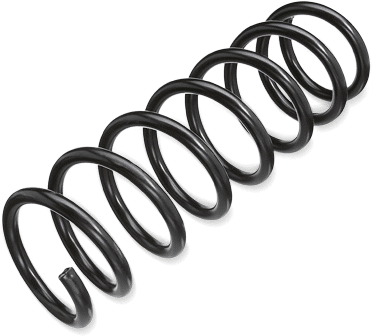
SACHS 998 953 Coil springOuter Diameter [mm]: 157; Diameter: 13; Length [mm]: 386; Fitting Position: Front Axle; Suspension: for vehicles with standard suspension; Wheelbase: short wheelbase; Vehicle Equipment Line/Trim Level: Standarddach; Payload [kg]: 625130,98 £*Shipping: 8,45 £Secure redirect to the provider
-
Why are alkyl groups hydrophobic and hydroxyl groups hydrophilic?
Alkyl groups are hydrophobic because they consist of nonpolar carbon and hydrogen atoms, which do not interact well with water molecules. This causes them to repel water and prefer to interact with other nonpolar molecules. On the other hand, hydroxyl groups are hydrophilic because they contain a polar covalent bond between oxygen and hydrogen, creating a partial negative charge on the oxygen and a partial positive charge on the hydrogen. This polarity allows hydroxyl groups to form hydrogen bonds with water molecules, making them soluble in water and thus hydrophilic. **
-
How can one recognize hydroxyl groups and carboxyl groups?
Hydroxyl groups can be recognized by the presence of an -OH functional group, which consists of an oxygen atom bonded to a hydrogen atom. Carboxyl groups can be recognized by the presence of a -COOH functional group, which consists of a carbonyl group (C=O) bonded to a hydroxyl group (-OH). Both hydroxyl and carboxyl groups are polar and can participate in hydrogen bonding, which gives them distinctive chemical properties. Additionally, hydroxyl groups are commonly found in alcohols and carbohydrates, while carboxyl groups are commonly found in organic acids and amino acids. **
-
Why do acids donate protons, but hydroxyl groups do not?
Acids donate protons because they have a tendency to lose a hydrogen ion (H+) in solution, making them capable of donating protons to other substances. This is due to the presence of a polar covalent bond between the hydrogen and the electronegative atom in the acid molecule. On the other hand, hydroxyl groups do not donate protons because the oxygen atom in the hydroxyl group is more electronegative than the hydrogen atom, resulting in a stronger bond between them. As a result, hydroxyl groups are more likely to accept protons rather than donate them. **
-
What is the difference between a hydroxyl group and hydroxide ions?
A hydroxyl group is a functional group consisting of an oxygen atom covalently bonded to a hydrogen atom, typically attached to a carbon atom in an organic compound. On the other hand, hydroxide ions are negatively charged ions consisting of an oxygen atom covalently bonded to a hydrogen atom, but with an additional electron, giving it a net charge of -1. Hydroxyl groups are found in organic molecules, while hydroxide ions are typically found in aqueous solutions as a result of the dissociation of water molecules. **
* All prices are inclusive of VAT and, if applicable, plus shipping costs. The offer information is based on the details provided by the respective shop and is updated through automated processes. Real-time updates do not occur, so deviations can occur in individual cases. ** Note: Parts of this content were created by AI.