Buy 953.eu ?
We are moving the project
953.eu .
Are you interested in purchasing the domain
953.eu ?
domain@kv-gmbh.de · 0541-91531010
Buy 953.eu ?
What are river variables and potential variables?
River variables are physical, chemical, and biological characteristics of a river that can be measured and monitored to assess its health and quality. These variables include parameters such as water temperature, pH levels, dissolved oxygen, nutrient concentrations, and the presence of pollutants. Potential variables are factors that can influence or impact the river variables, such as land use practices, urban development, agricultural runoff, and climate change. Understanding both river variables and potential variables is essential for effective river management and conservation efforts. **
What is the difference between primitive variables and reference variables?
Primitive variables store the actual value, such as numbers or characters, directly in memory. Reference variables, on the other hand, store a reference to an object in memory rather than the actual value. This means that when working with reference variables, you are actually working with the object that the reference points to, while with primitive variables, you are working directly with the value stored in memory. Additionally, primitive variables are allocated on the stack, while reference variables are allocated on the heap. **

Similar search terms for Variables
Top-Angebote
Products related to Variables:
-
Klutz: LEGO GadgetsThis activity kit will have you building 11 machines including a gravity powered car and a wacky boxing robot. The fun doesn't stop once you've completed all of the projects in the book - open-ended prompts will inspire you to continue experimenting...24,99 $*Shipping: 0,00 $Secure redirect to the provider
-
TOPRAN 720 953 Air filterFilter type: Filter Insert; Shape: Cylindrical; Frame Material: Foam; Height: 122; Outer Diameter [mm]: 168; Inner Diameter [mm]: 118; Emissions Standard: CEE 19-5, US 87, CEE 95; for RPO number up to: 07972, 07300; for RPO number from: 07973; TecDoc Engine Number: 28349,99 £*Shipping: 8,45 £Secure redirect to the provider
-
VEGAZ FK-953 Catalytic converterFitting Position: Front; Length [mm]: 540; Emissions Standard: Euro 1/Euro 2; Supplementary Article / Supplementary Info: with attachment/mounting material; Registration Type: ECE approved; Certificate: ECE-R103; Construction Year from: 01/1996, 03/1998, 01/1998, 05/1997, 11/1997, 10/1998; Construction Year to: 03/1998, 08/2000, 10/2002; Engine Code: JJA, HCS, JJB; Catalytic Converter Type: for vehicles with catalytic converter; Vehicle Equipment: for vehicles without OBD, for vehicles with air conditioning, for vehicles with OBD; Vehicle Equipment Line/Trim Level: Courier, EEC7 Emissions; TecDoc Engine Number: 12083, 17169238,99 £*Shipping: 1,99 £Secure redirect to the provider
-
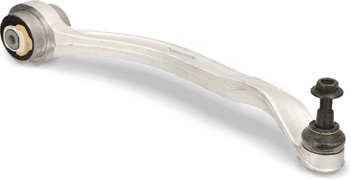
OPTIMAL G5-953 Suspension armFitting Position: Lower, Front, Front Axle, Left; Control/Trailing Arm Type: Control Arm; Length [mm]: 398; Required quantity: 1; Material: Aluminium; Mounting Type: Rubber-Metal Mount; Replace in pairs only: ; Supplementary Article / Supplementary Info Info 2: with ball joint, with rubber mount; Mounting points diameter [mm]: 14,2; Paired product: G5-954; External Thread [mm]: M16 x 1,50 RHT M; Registration Type: TÜV®/GS approved; Bolt Head Diameter [mm]: 19213,99 £*Shipping: 1,99 £Secure redirect to the provider



-
What is the difference between ordinal scaled variables and ordinal variables?
Ordinal scaled variables are variables that have a specific order or ranking, but the intervals between the values are not necessarily equal. On the other hand, ordinal variables are variables that have categories with a natural order, but the numerical values assigned to them do not have any meaningful interpretation. In summary, ordinal scaled variables have meaningful numerical values with a specific order, while ordinal variables have categories with a natural order but lack meaningful numerical values. **
-
What are random variables?
Random variables are variables that can take on different values based on the outcome of a random event. They represent the possible outcomes of a random process and are used in probability theory and statistics to quantify uncertainty. Random variables can be discrete, taking on a finite number of values, or continuous, taking on any value within a range. They are essential for modeling and analyzing uncertain situations in various fields such as finance, engineering, and biology. **
-
What are reduced variables?
Reduced variables are a set of transformed variables that are used to simplify the analysis of a system or process. These variables are often obtained by scaling or normalizing the original variables to make them more manageable and easier to interpret. By using reduced variables, complex systems can be analyzed and understood more effectively, leading to better insights and decision-making. **
-
How do I solve an equation with form variables and solution variables?
To solve an equation with form variables and solution variables, you first need to isolate the solution variable on one side of the equation. This involves performing the necessary operations (addition, subtraction, multiplication, division) to move all other variables to the other side of the equation. Once you have isolated the solution variable, you can then solve for it by performing any additional operations needed to simplify the equation. Finally, you can substitute the solution back into the original equation to verify that it satisfies the equation. **

What is a local variable and what is the difference to instance variables, class variables, and normal variables in Java?
A local variable in Java is a variable that is declared within a method, constructor, or block of code and is only accessible within that specific scope. It is temporary and exists only for the duration of the method execution. The main difference between local variables, instance variables, class variables, and normal variables in Java is their scope and lifetime. Instance variables are declared within a class but outside of any method and are accessible to all methods within the class. Class variables are declared with the static keyword and are shared among all instances of a class. Normal variables refer to any variable that is not a local, instance, or class variable. **
What are variables in programming?
Variables in programming are containers that hold data values. They are used to store and manipulate data within a program. Variables have a name, a data type, and a value associated with them. They allow programmers to work with and manipulate data dynamically during the execution of a program. **
Top-Angebote
Products related to Variables:
-
Rare Purchases Piece Repair Tool Kit With Torx Screwdrivers For Digital Devices And Gadgets magnetismIntroducing our Multifunctional Precision Screwdriver Set, the essential tool kit for anyone who works with digital devices. Whether you're repairing a phone, tablet, PC, or any other gadget, this versatile tool set provides all the necessary...49,97 $*Shipping: 0,00 $Secure redirect to the provider
-
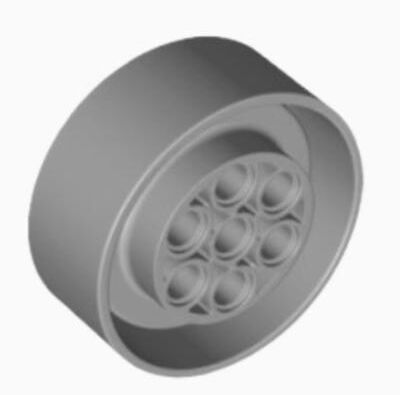
Lush Living Finds Perforated Brick Assembly Toy Accessories With Technology Mechanical Wheels Perforated Brick Assembly Toy Accessories With Technology Mechanical WheelsEnhance Creativity with Technology Mechanical Wheels Unlock the power of innovation with our technology mechanical wheels, designed specifically for perforated brick assembly toy accessories. Whether you are a hobbyist or a seasoned builder, these...43,97 $*Shipping: 0,00 $Secure redirect to the provider
-
Klutz: LEGO GadgetsThis activity kit will have you building 11 machines including a gravity powered car and a wacky boxing robot. The fun doesn't stop once you've completed all of the projects in the book - open-ended prompts will inspire you to continue experimenting...24,99 $*Shipping: 0,00 $Secure redirect to the provider
-
TOPRAN 720 953 Air filterFilter type: Filter Insert; Shape: Cylindrical; Frame Material: Foam; Height: 122; Outer Diameter [mm]: 168; Inner Diameter [mm]: 118; Emissions Standard: CEE 19-5, US 87, CEE 95; for RPO number up to: 07972, 07300; for RPO number from: 07973; TecDoc Engine Number: 28349,99 £*Shipping: 8,45 £Secure redirect to the provider
-
What are river variables and potential variables?
River variables are physical, chemical, and biological characteristics of a river that can be measured and monitored to assess its health and quality. These variables include parameters such as water temperature, pH levels, dissolved oxygen, nutrient concentrations, and the presence of pollutants. Potential variables are factors that can influence or impact the river variables, such as land use practices, urban development, agricultural runoff, and climate change. Understanding both river variables and potential variables is essential for effective river management and conservation efforts. **
-
What is the difference between primitive variables and reference variables?
Primitive variables store the actual value, such as numbers or characters, directly in memory. Reference variables, on the other hand, store a reference to an object in memory rather than the actual value. This means that when working with reference variables, you are actually working with the object that the reference points to, while with primitive variables, you are working directly with the value stored in memory. Additionally, primitive variables are allocated on the stack, while reference variables are allocated on the heap. **
-
What is the difference between ordinal scaled variables and ordinal variables?
Ordinal scaled variables are variables that have a specific order or ranking, but the intervals between the values are not necessarily equal. On the other hand, ordinal variables are variables that have categories with a natural order, but the numerical values assigned to them do not have any meaningful interpretation. In summary, ordinal scaled variables have meaningful numerical values with a specific order, while ordinal variables have categories with a natural order but lack meaningful numerical values. **
-
What are random variables?
Random variables are variables that can take on different values based on the outcome of a random event. They represent the possible outcomes of a random process and are used in probability theory and statistics to quantify uncertainty. Random variables can be discrete, taking on a finite number of values, or continuous, taking on any value within a range. They are essential for modeling and analyzing uncertain situations in various fields such as finance, engineering, and biology. **
Similar search terms for Variables
-
VEGAZ FK-953 Catalytic converterFitting Position: Front; Length [mm]: 540; Emissions Standard: Euro 1/Euro 2; Supplementary Article / Supplementary Info: with attachment/mounting material; Registration Type: ECE approved; Certificate: ECE-R103; Construction Year from: 01/1996, 03/1998, 01/1998, 05/1997, 11/1997, 10/1998; Construction Year to: 03/1998, 08/2000, 10/2002; Engine Code: JJA, HCS, JJB; Catalytic Converter Type: for vehicles with catalytic converter; Vehicle Equipment: for vehicles without OBD, for vehicles with air conditioning, for vehicles with OBD; Vehicle Equipment Line/Trim Level: Courier, EEC7 Emissions; TecDoc Engine Number: 12083, 17169238,99 £*Shipping: 1,99 £Secure redirect to the provider
-
OPTIMAL G5-953 Suspension armFitting Position: Lower, Front, Front Axle, Left; Control/Trailing Arm Type: Control Arm; Length [mm]: 398; Required quantity: 1; Material: Aluminium; Mounting Type: Rubber-Metal Mount; Replace in pairs only: ; Supplementary Article / Supplementary Info Info 2: with ball joint, with rubber mount; Mounting points diameter [mm]: 14,2; Paired product: G5-954; External Thread [mm]: M16 x 1,50 RHT M; Registration Type: TÜV®/GS approved; Bolt Head Diameter [mm]: 19213,99 £*Shipping: 1,99 £Secure redirect to the provider
-
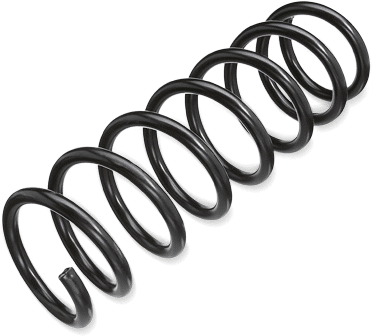
SACHS 998 953 Coil springOuter Diameter [mm]: 157; Diameter: 13; Length [mm]: 386; Fitting Position: Front Axle; Suspension: for vehicles with standard suspension; Wheelbase: short wheelbase; Vehicle Equipment Line/Trim Level: Standarddach; Payload [kg]: 625130,98 £*Shipping: 8,45 £Secure redirect to the provider
-
What are reduced variables?
Reduced variables are a set of transformed variables that are used to simplify the analysis of a system or process. These variables are often obtained by scaling or normalizing the original variables to make them more manageable and easier to interpret. By using reduced variables, complex systems can be analyzed and understood more effectively, leading to better insights and decision-making. **
-
How do I solve an equation with form variables and solution variables?
To solve an equation with form variables and solution variables, you first need to isolate the solution variable on one side of the equation. This involves performing the necessary operations (addition, subtraction, multiplication, division) to move all other variables to the other side of the equation. Once you have isolated the solution variable, you can then solve for it by performing any additional operations needed to simplify the equation. Finally, you can substitute the solution back into the original equation to verify that it satisfies the equation. **
-
What is a local variable and what is the difference to instance variables, class variables, and normal variables in Java?
A local variable in Java is a variable that is declared within a method, constructor, or block of code and is only accessible within that specific scope. It is temporary and exists only for the duration of the method execution. The main difference between local variables, instance variables, class variables, and normal variables in Java is their scope and lifetime. Instance variables are declared within a class but outside of any method and are accessible to all methods within the class. Class variables are declared with the static keyword and are shared among all instances of a class. Normal variables refer to any variable that is not a local, instance, or class variable. **
-
What are variables in programming?
Variables in programming are containers that hold data values. They are used to store and manipulate data within a program. Variables have a name, a data type, and a value associated with them. They allow programmers to work with and manipulate data dynamically during the execution of a program. **
* All prices are inclusive of VAT and, if applicable, plus shipping costs. The offer information is based on the details provided by the respective shop and is updated through automated processes. Real-time updates do not occur, so deviations can occur in individual cases. ** Note: Parts of this content were created by AI.