Buy 953.eu ?
We are moving the project
953.eu .
Are you interested in purchasing the domain
953.eu ?
domain@kv-gmbh.de · 0541-91531010
Buy 953.eu ?
What are math coefficients?
Math coefficients are the numerical factors that are multiplied by variables in algebraic expressions or equations. They represent the scale or magnitude of the variable in the expression. For example, in the expression 3x + 5, the coefficient of x is 3. Coefficients are important in understanding the behavior and relationships between variables in mathematical equations and expressions. **
What are coefficients in chemistry?
In chemistry, coefficients are the numbers placed in front of chemical formulas in a balanced chemical equation. These coefficients represent the ratio of moles of each substance involved in the reaction. Coefficients are used to balance chemical equations by ensuring that the number of atoms of each element is the same on both sides of the equation. They help in determining the stoichiometry of a reaction, which is the quantitative relationship between reactants and products in a chemical reaction. **

Similar search terms for Coefficients
Top-Angebote
Products related to Coefficients:
-
Klutz: LEGO GadgetsThis activity kit will have you building 11 machines including a gravity powered car and a wacky boxing robot. The fun doesn't stop once you've completed all of the projects in the book - open-ended prompts will inspire you to continue experimenting...24,99 $*Shipping: 0,00 $Secure redirect to the provider
-
TOPRAN 720 953 Air filterFilter type: Filter Insert; Shape: Cylindrical; Frame Material: Foam; Height: 122; Outer Diameter [mm]: 168; Inner Diameter [mm]: 118; Emissions Standard: CEE 19-5, US 87, CEE 95; for RPO number up to: 07972, 07300; for RPO number from: 07973; TecDoc Engine Number: 28349,99 £*Shipping: 8,45 £Secure redirect to the provider
-
VEGAZ FK-953 Catalytic converterFitting Position: Front; Length [mm]: 540; Emissions Standard: Euro 1/Euro 2; Supplementary Article / Supplementary Info: with attachment/mounting material; Registration Type: ECE approved; Certificate: ECE-R103; Construction Year from: 01/1996, 03/1998, 01/1998, 05/1997, 11/1997, 10/1998; Construction Year to: 03/1998, 08/2000, 10/2002; Engine Code: JJA, HCS, JJB; Catalytic Converter Type: for vehicles with catalytic converter; Vehicle Equipment: for vehicles without OBD, for vehicles with air conditioning, for vehicles with OBD; Vehicle Equipment Line/Trim Level: Courier, EEC7 Emissions; TecDoc Engine Number: 12083, 17169238,99 £*Shipping: 1,99 £Secure redirect to the provider
-
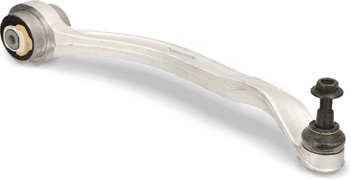
OPTIMAL G5-953 Suspension armFitting Position: Lower, Front, Front Axle, Left; Control/Trailing Arm Type: Control Arm; Length [mm]: 398; Required quantity: 1; Material: Aluminium; Mounting Type: Rubber-Metal Mount; Replace in pairs only: ; Supplementary Article / Supplementary Info Info 2: with ball joint, with rubber mount; Mounting points diameter [mm]: 14,2; Paired product: G5-954; External Thread [mm]: M16 x 1,50 RHT M; Registration Type: TÜV®/GS approved; Bolt Head Diameter [mm]: 19213,99 £*Shipping: 1,99 £Secure redirect to the provider



-
How are extinction coefficients calculated?
Extinction coefficients are calculated by measuring the absorbance of a substance at a specific wavelength using a spectrophotometer. The absorbance value is then used in the Beer-Lambert law equation, A = εlc, where A is the absorbance, ε is the extinction coefficient, l is the path length of the sample, and c is the concentration of the substance. By rearranging the equation, the extinction coefficient (ε) can be calculated by dividing the absorbance (A) by the product of the path length (l) and concentration (c) of the substance. **
-
How do I determine the coefficients?
To determine the coefficients in a mathematical equation, you can use various methods depending on the type of equation. For linear equations, you can use the method of substitution or elimination to solve for the coefficients. For quadratic equations, you can use the method of completing the square or the quadratic formula to find the coefficients. In general, you can also use regression analysis or curve fitting techniques to determine the coefficients in a more complex equation. **
-
How do you determine the coefficients?
The coefficients in a mathematical equation are determined through a process called regression analysis. This involves using statistical techniques to find the best-fitting line or curve that represents the relationship between the variables in the equation. The coefficients are then calculated based on the data points and the specific regression model being used, such as linear regression or polynomial regression. The goal is to find the coefficients that minimize the difference between the predicted values from the model and the actual observed values in the data. **
-
How do you calculate the extinction coefficients?
The extinction coefficient, also known as molar absorptivity, is calculated using the Beer-Lambert law, which relates the absorbance of a substance to its concentration and the path length of the sample. The formula for calculating the extinction coefficient is ε = A / (c * l), where ε is the extinction coefficient, A is the absorbance, c is the concentration, and l is the path length. By measuring the absorbance of a known concentration of the substance at a specific path length, the extinction coefficient can be determined. This value is important for quantifying the concentration of a substance in a solution using spectrophotometry. **

What is the problem with the coefficients?
The problem with the coefficients is that they can be sensitive to the scale of the input variables. This means that if the input variables are on different scales, the coefficients may not accurately represent the true relationship between the variables and the target. Additionally, coefficients can be difficult to interpret when the input variables are not standardized, making it challenging to compare the impact of different variables on the target. Standardizing the input variables can help address these issues by putting them on the same scale and making the coefficients more interpretable and comparable. **
How do you get to the coefficients here?
To get the coefficients in a linear regression model, we use a method called ordinary least squares (OLS). This method minimizes the sum of the squared differences between the observed values and the values predicted by the model. By minimizing this sum, we can find the coefficients that best fit the data. The coefficients represent the relationship between the independent variables and the dependent variable in the model. **
Top-Angebote
Products related to Coefficients:
-
Rare Purchases Piece Repair Tool Kit With Torx Screwdrivers For Digital Devices And Gadgets magnetismIntroducing our Multifunctional Precision Screwdriver Set, the essential tool kit for anyone who works with digital devices. Whether you're repairing a phone, tablet, PC, or any other gadget, this versatile tool set provides all the necessary...49,97 $*Shipping: 0,00 $Secure redirect to the provider
-
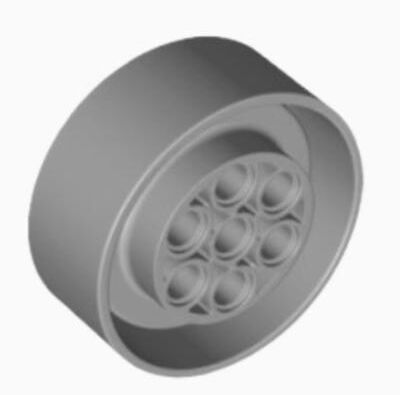
Lush Living Finds Perforated Brick Assembly Toy Accessories With Technology Mechanical Wheels Perforated Brick Assembly Toy Accessories With Technology Mechanical WheelsEnhance Creativity with Technology Mechanical Wheels Unlock the power of innovation with our technology mechanical wheels, designed specifically for perforated brick assembly toy accessories. Whether you are a hobbyist or a seasoned builder, these...43,97 $*Shipping: 0,00 $Secure redirect to the provider
-
Klutz: LEGO GadgetsThis activity kit will have you building 11 machines including a gravity powered car and a wacky boxing robot. The fun doesn't stop once you've completed all of the projects in the book - open-ended prompts will inspire you to continue experimenting...24,99 $*Shipping: 0,00 $Secure redirect to the provider
-
TOPRAN 720 953 Air filterFilter type: Filter Insert; Shape: Cylindrical; Frame Material: Foam; Height: 122; Outer Diameter [mm]: 168; Inner Diameter [mm]: 118; Emissions Standard: CEE 19-5, US 87, CEE 95; for RPO number up to: 07972, 07300; for RPO number from: 07973; TecDoc Engine Number: 28349,99 £*Shipping: 8,45 £Secure redirect to the provider
-
What are math coefficients?
Math coefficients are the numerical factors that are multiplied by variables in algebraic expressions or equations. They represent the scale or magnitude of the variable in the expression. For example, in the expression 3x + 5, the coefficient of x is 3. Coefficients are important in understanding the behavior and relationships between variables in mathematical equations and expressions. **
-
What are coefficients in chemistry?
In chemistry, coefficients are the numbers placed in front of chemical formulas in a balanced chemical equation. These coefficients represent the ratio of moles of each substance involved in the reaction. Coefficients are used to balance chemical equations by ensuring that the number of atoms of each element is the same on both sides of the equation. They help in determining the stoichiometry of a reaction, which is the quantitative relationship between reactants and products in a chemical reaction. **
-
How are extinction coefficients calculated?
Extinction coefficients are calculated by measuring the absorbance of a substance at a specific wavelength using a spectrophotometer. The absorbance value is then used in the Beer-Lambert law equation, A = εlc, where A is the absorbance, ε is the extinction coefficient, l is the path length of the sample, and c is the concentration of the substance. By rearranging the equation, the extinction coefficient (ε) can be calculated by dividing the absorbance (A) by the product of the path length (l) and concentration (c) of the substance. **
-
How do I determine the coefficients?
To determine the coefficients in a mathematical equation, you can use various methods depending on the type of equation. For linear equations, you can use the method of substitution or elimination to solve for the coefficients. For quadratic equations, you can use the method of completing the square or the quadratic formula to find the coefficients. In general, you can also use regression analysis or curve fitting techniques to determine the coefficients in a more complex equation. **
Similar search terms for Coefficients
-
VEGAZ FK-953 Catalytic converterFitting Position: Front; Length [mm]: 540; Emissions Standard: Euro 1/Euro 2; Supplementary Article / Supplementary Info: with attachment/mounting material; Registration Type: ECE approved; Certificate: ECE-R103; Construction Year from: 01/1996, 03/1998, 01/1998, 05/1997, 11/1997, 10/1998; Construction Year to: 03/1998, 08/2000, 10/2002; Engine Code: JJA, HCS, JJB; Catalytic Converter Type: for vehicles with catalytic converter; Vehicle Equipment: for vehicles without OBD, for vehicles with air conditioning, for vehicles with OBD; Vehicle Equipment Line/Trim Level: Courier, EEC7 Emissions; TecDoc Engine Number: 12083, 17169238,99 £*Shipping: 1,99 £Secure redirect to the provider
-
OPTIMAL G5-953 Suspension armFitting Position: Lower, Front, Front Axle, Left; Control/Trailing Arm Type: Control Arm; Length [mm]: 398; Required quantity: 1; Material: Aluminium; Mounting Type: Rubber-Metal Mount; Replace in pairs only: ; Supplementary Article / Supplementary Info Info 2: with ball joint, with rubber mount; Mounting points diameter [mm]: 14,2; Paired product: G5-954; External Thread [mm]: M16 x 1,50 RHT M; Registration Type: TÜV®/GS approved; Bolt Head Diameter [mm]: 19213,99 £*Shipping: 1,99 £Secure redirect to the provider
-
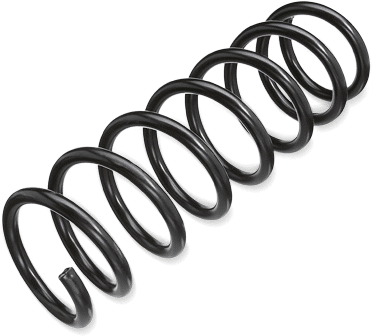
SACHS 998 953 Coil springOuter Diameter [mm]: 157; Diameter: 13; Length [mm]: 386; Fitting Position: Front Axle; Suspension: for vehicles with standard suspension; Wheelbase: short wheelbase; Vehicle Equipment Line/Trim Level: Standarddach; Payload [kg]: 625130,98 £*Shipping: 8,45 £Secure redirect to the provider
-
How do you determine the coefficients?
The coefficients in a mathematical equation are determined through a process called regression analysis. This involves using statistical techniques to find the best-fitting line or curve that represents the relationship between the variables in the equation. The coefficients are then calculated based on the data points and the specific regression model being used, such as linear regression or polynomial regression. The goal is to find the coefficients that minimize the difference between the predicted values from the model and the actual observed values in the data. **
-
How do you calculate the extinction coefficients?
The extinction coefficient, also known as molar absorptivity, is calculated using the Beer-Lambert law, which relates the absorbance of a substance to its concentration and the path length of the sample. The formula for calculating the extinction coefficient is ε = A / (c * l), where ε is the extinction coefficient, A is the absorbance, c is the concentration, and l is the path length. By measuring the absorbance of a known concentration of the substance at a specific path length, the extinction coefficient can be determined. This value is important for quantifying the concentration of a substance in a solution using spectrophotometry. **
-
What is the problem with the coefficients?
The problem with the coefficients is that they can be sensitive to the scale of the input variables. This means that if the input variables are on different scales, the coefficients may not accurately represent the true relationship between the variables and the target. Additionally, coefficients can be difficult to interpret when the input variables are not standardized, making it challenging to compare the impact of different variables on the target. Standardizing the input variables can help address these issues by putting them on the same scale and making the coefficients more interpretable and comparable. **
-
How do you get to the coefficients here?
To get the coefficients in a linear regression model, we use a method called ordinary least squares (OLS). This method minimizes the sum of the squared differences between the observed values and the values predicted by the model. By minimizing this sum, we can find the coefficients that best fit the data. The coefficients represent the relationship between the independent variables and the dependent variable in the model. **
* All prices are inclusive of VAT and, if applicable, plus shipping costs. The offer information is based on the details provided by the respective shop and is updated through automated processes. Real-time updates do not occur, so deviations can occur in individual cases. ** Note: Parts of this content were created by AI.